
What Causes Hair Thinning in Women: Hormones, Iron and More
Last Updated: November 17, 2026
Quick Summary
Hair thinning in women usually has several overlapping causes rather than one. The most common are genetics (female pattern hair loss), hormonal changes such as pregnancy, childbirth, and menopause, temporary shedding after stress or illness, nutritional gaps like low iron, and certain medications or medical conditions.
- Female pattern hair loss is the most common form of alopecia in women.
- Postpartum shedding typically starts two to three months after delivery and usually resolves on its own.
- Low ferritin can cause shedding even when hemoglobin levels are normal.
- Restrictive crash dieting often leads to shedding two to three months after it begins.
- Sudden, patchy loss or scalp pain warrants prompt evaluation by a clinician.
Table of Contents
- Common Causes of Hair Thinning in Women
- Which Hormone Causes Hair Loss in Females?
- Which Vitamin Deficiency Causes Hair Loss, and Other Nutritional Triggers
- Why Is My Hair Thinning at 20? Causes Before Your Thirties
- Frequently Asked Questions
Common Causes of Hair Thinning in Women
Hair thinning in women rarely has a single cause. A woman in her thirties might notice more strands in the brush while the real trigger is a recent illness, crash diet, or hormonal shift that began months earlier.
Female pattern hair loss is the most common form of alopecia in women and can cause real psychological distress Female pattern hair loss: A clinical, pathophysiologic, and therapeutic review. Fewer than 45% of women go through life with a full head of hair, and prevalence climbs with age Female pattern hair loss: Current treatment concepts.
The main causes include:
- Genetics and female pattern hair loss, thinning gradually across the crown and part line
- Hormonal changes, including pregnancy, childbirth, and menopause
- Telogen effluvium, temporary shedding after stress, illness, or high fever
- Nutritional gaps, such as iron or vitamin D deficiency
- Medications and medical conditions that disrupt the growth cycle
A hospital-based study of diffuse hair loss in women identified telogen effluvium, female pattern hair loss, chronic telogen effluvium, and anagen effluvium among its causes A Hospital-based Study to Determine Causes of Diffuse Hair Loss in Women. Don't assume genetics alone, childbirth, crash dieting, and sustained stress all contribute. If you're wondering whether your thinning is serious enough to need professional care, see when dermatologists recommend hair restoration treatments.
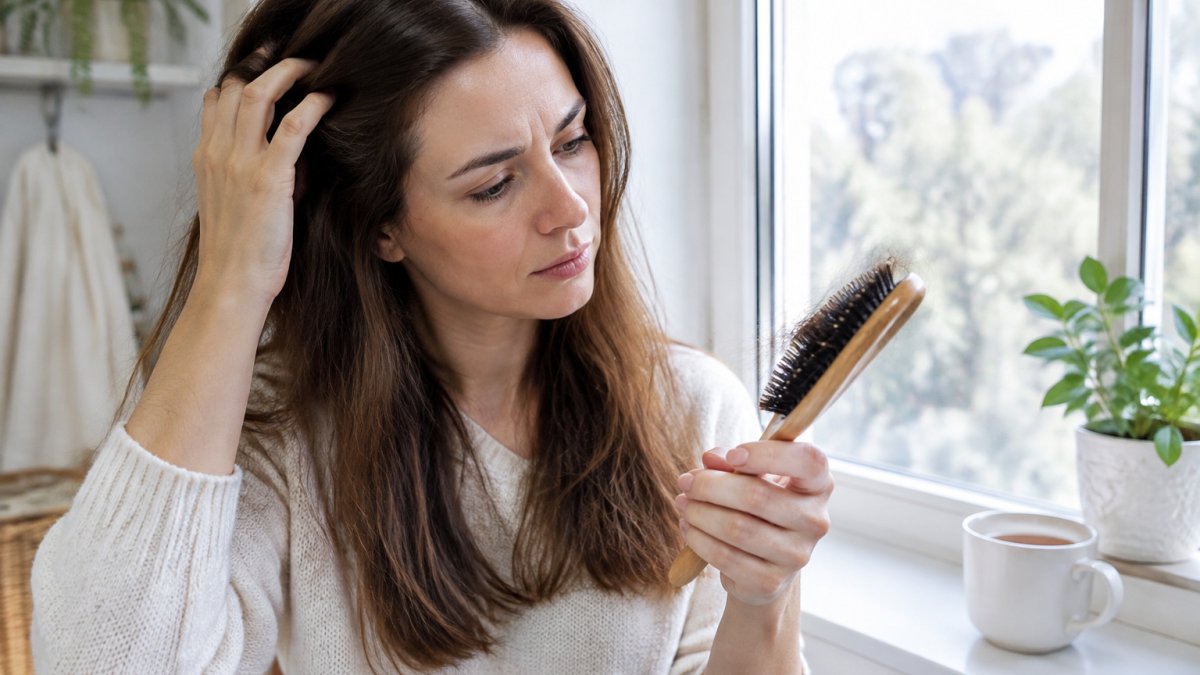
The main causes of thinning in women, and how each one shows up, are summarised below.
| Cause | Typical pattern | Note |
|---|---|---|
| Genetics and female pattern hair loss | Gradual thinning across the crown and part line | Most common form of alopecia in women |
| Hormonal changes | Pregnancy, childbirth, menopause | Can trigger or accelerate thinning |
| Telogen effluvium | Temporary shedding | Follows stress, illness, or high fever |
| Nutritional gaps | Shedding linked to low iron or vitamin D | Testing is needed to confirm deficiency |
| Medications and medical conditions | Disrupted growth cycle | Can cause shedding |
Which Hormone Causes Hair Loss in Females?
Androgens are most often linked to female thinning, but the picture is more nuanced than "high testosterone." In female pattern hair loss, follicles in susceptible areas become more sensitive to androgens, particularly dihydrotestosterone (DHT), converted from testosterone by 5-alpha reductase. Strands become finer, shorter, and less pigmented before they stop growing, which is why thinning appears along the part line and crown rather than as uniform shedding.
Hormonal shifts across the lifespan can trigger or accelerate thinning:
- Pregnancy and childbirth. High estrogen prolongs the growth (anagen) phase. After delivery, estrogen drops and many follicles shift into the resting (telogen) phase at once, producing heavy shedding, typically starting two to three months postpartum and peaking around four to six months. This postpartum telogen effluvium usually resolves on its own, though density may take a year or more to recover.
- Perimenopause and menopause. Declining estrogen and progesterone change the balance relative to androgens, and many women notice gradual thinning along the part line.
- Thyroid conditions. Both hypothyroidism and hyperthyroidism can cause diffuse shedding, usually reversible once treated.
- Polycystic ovary syndrome (PCOS). PCOS can raise androgen levels and is associated with thinning at the crown, plus acne and irregular cycles.
- Starting or stopping hormonal contraception. Some women notice shedding after discontinuing certain methods.
A key point competitors skip: "hormonal hair loss" is not one condition. Postpartum shedding, menopausal thinning, thyroid-related shedding, and androgen-driven pattern loss have different timelines and next steps. Testing (thyroid function, androgen levels) depends on your symptoms rather than being routine.
Saw palmetto is a botanical sometimes discussed for androgen-related thinning and appears in some scalp and shampoo formulations. It is not a substitute for a diagnosis. If you want a topical option while you pursue evaluation, our Restoration Shampoo includes saw palmetto oil. For a structured option, Vive Naturals Hair Restoration Treatment offers a complete 3-step system.
Watch out: Sudden, patchy loss, scalp pain, or rapid progression over weeks is not typical hormonal thinning and warrants prompt evaluation.
Which Vitamin Deficiency Causes Hair Loss, and Other Nutritional Triggers
Nutrition can affect hair, but the relationship is narrower than supplement marketing suggests. Hair follicles are among the most metabolically active tissues, so severe nutritional shortfalls can push follicles into the resting phase and increase shedding. Most women who notice thinning do not have a frank deficiency, and extra vitamins without one are unlikely to help.
Iron and ferritin. Low iron stores are the nutritional factor most consistently linked to shedding in women, particularly those with heavy periods or low iron intake. Ferritin can be low even when hemoglobin is normal, so a complete blood count alone may miss iron-related shedding.
Vitamin D. Low vitamin D has been associated with hair loss in observational studies, but causation is not established, and routine high-dose supplementation has not been shown to regrow hair in women with normal levels.
Other nutrients. Zinc, vitamin B12, folate, and protein all play roles in hair growth, and deficiencies can contribute to shedding, but they are uncommon in women eating a varied diet. Restrictive dieting, very low calorie intake, crash diets, or cutting out entire food groups, is a more common trigger, with shedding typically appearing two to three months after the diet begins.
Why testing matters more than guessing. A blood test is the reliable way to confirm a deficiency before changing supplements. Clinicians commonly check ferritin, a complete blood count, thyroid function, and vitamin D, and may add B12, folate, or zinc depending on diet and history.
The supplement safety problem. More is not better. Excess iron can cause gastrointestinal distress and, rarely, organ damage; high-dose vitamin A is associated with hair loss rather than growth; and megadoses of some B vitamins can cause other harms. Many hair, skin, and nail supplements are marketed as dietary supplements, meaning they are not reviewed for efficacy by the Food and Drug Administration before sale. Self-treating can delay a real diagnosis and add cost without benefit.
A practical sequence: if you suspect a nutritional trigger, ask for testing rather than starting supplements; correct any confirmed deficiency with your clinician's guidance; and give regrowth time, improvement typically takes months, not weeks.
Watch out: If you have heavy periods, follow a vegan or restricted diet, or have had bariatric surgery, your risk of a true deficiency is higher, and testing is more important than supplementing on assumption.
Why Is My Hair Thinning at 20? Causes Before Your Thirties
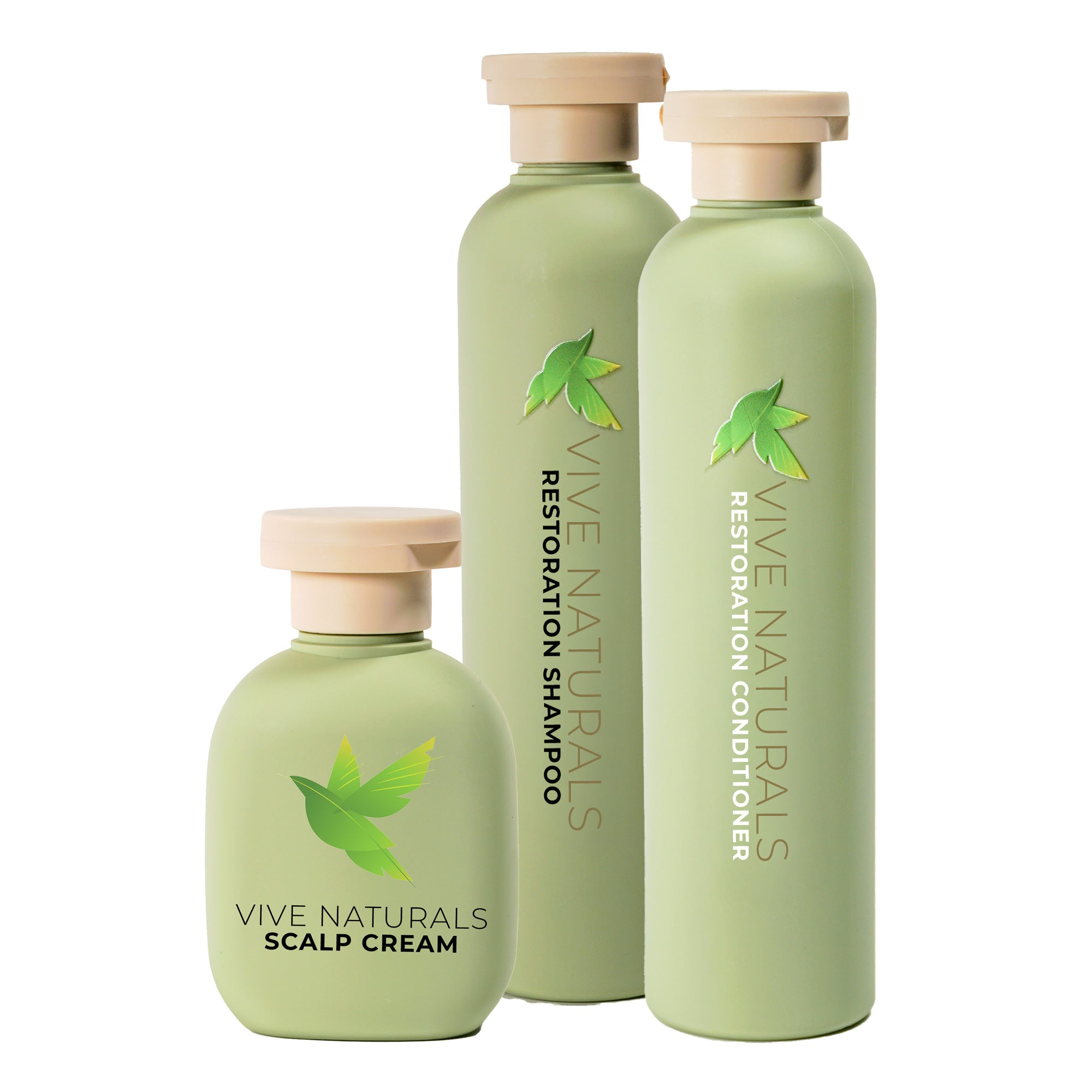
Thinning in your twenties is less common than in later decades, but it happens. Stress, a recent fever, rapid weight loss, and tight hairstyles that pull on the follicles are frequent triggers. Hair that thins at 20 often recovers once the underlying cause is addressed. A complete 3-step hair restoration system is one option for supporting scalp and strand health while you identify the cause.
If thinning is progressing or accompanied by patches or scalp irritation, see a doctor or dermatologist for an evaluation.
Hair thinning is frustrating, but the cause is often findable. Start by looking at recent stress, illness, diet, and hormonal changes, then choose care that fits your situation. Vive Naturals builds plant-based hair and scalp care around saw palmetto and aloe vera, and our Restoration Shampoo, Conditioner, and Scalp Cream work together as a complete routine.
Frequently Asked Questions
Can stress or illness cause sudden hair loss in women?
Yes. Physical stress such as childbirth, severe infection or high fever, rapid weight loss, and crash dieting can trigger telogen effluvium, a diffuse shedding that often appears a few months after the trigger. Shedding is usually temporary once the underlying stressor resolves, though recovery can take several months. Because many of these triggers overlap, a clinician can help sort out which factor is most likely responsible.
When should a woman see a doctor about hair thinning?
See a doctor if thinning is progressive, patchy, accompanied by scalp pain, redness, scaling, or itching, or if it is sudden and heavy. Evaluation may include a review of medications, thyroid and iron studies, and vitamin D and hormone testing where indicated. Early assessment helps identify treatable causes and rules out conditions such as alopecia areata or scalp infection.
